The Idea Is Simple; the Engineering Is Not
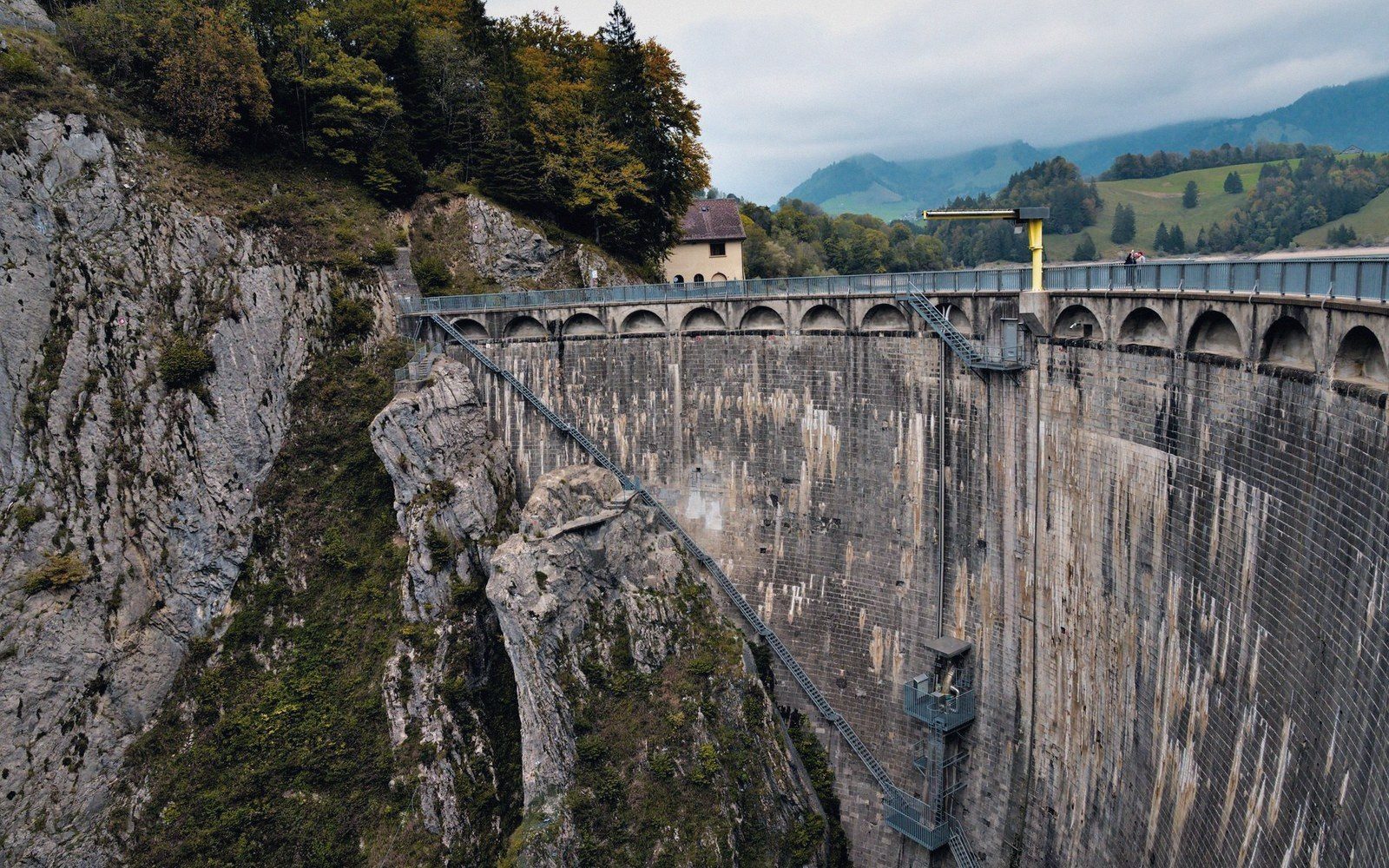
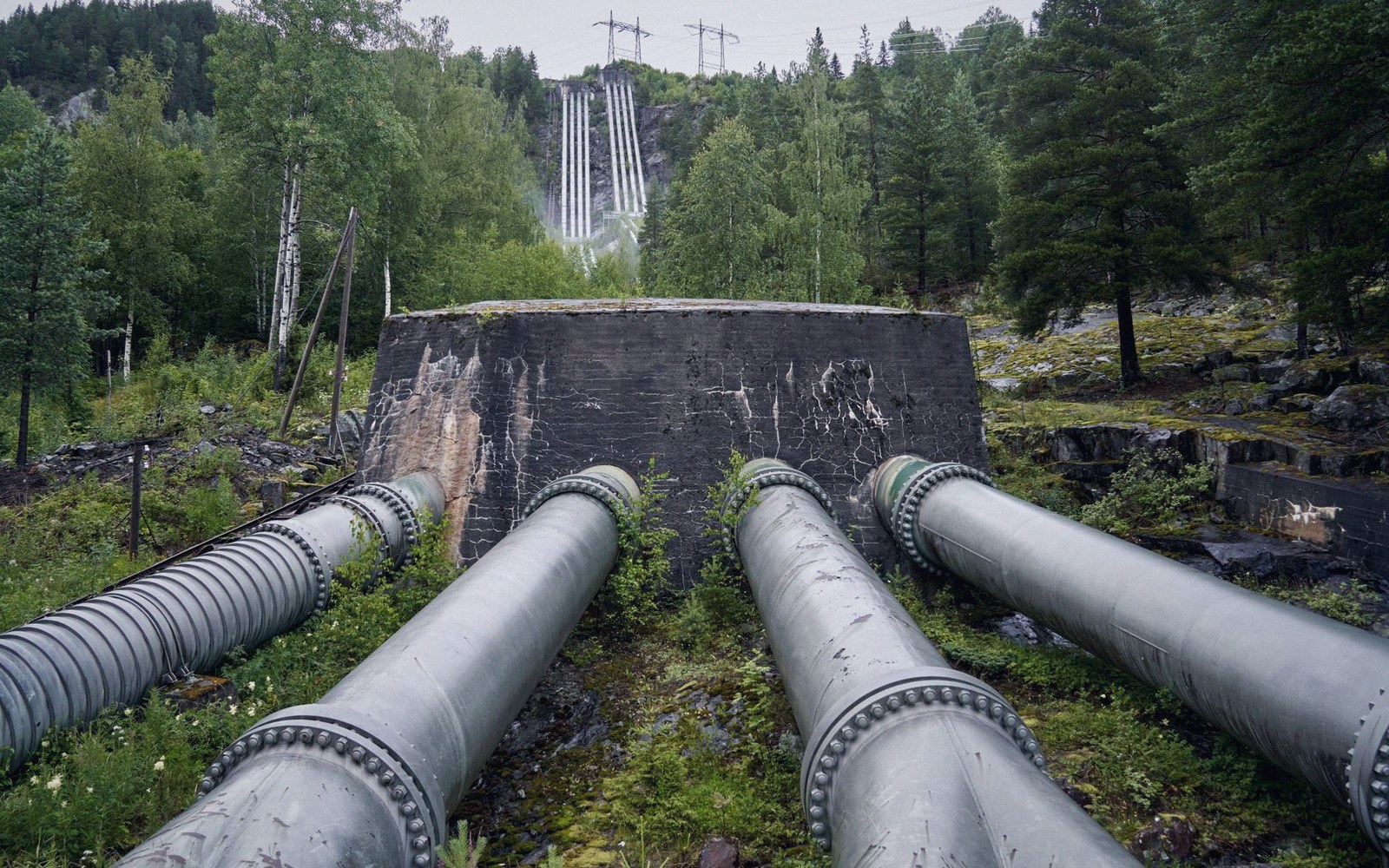
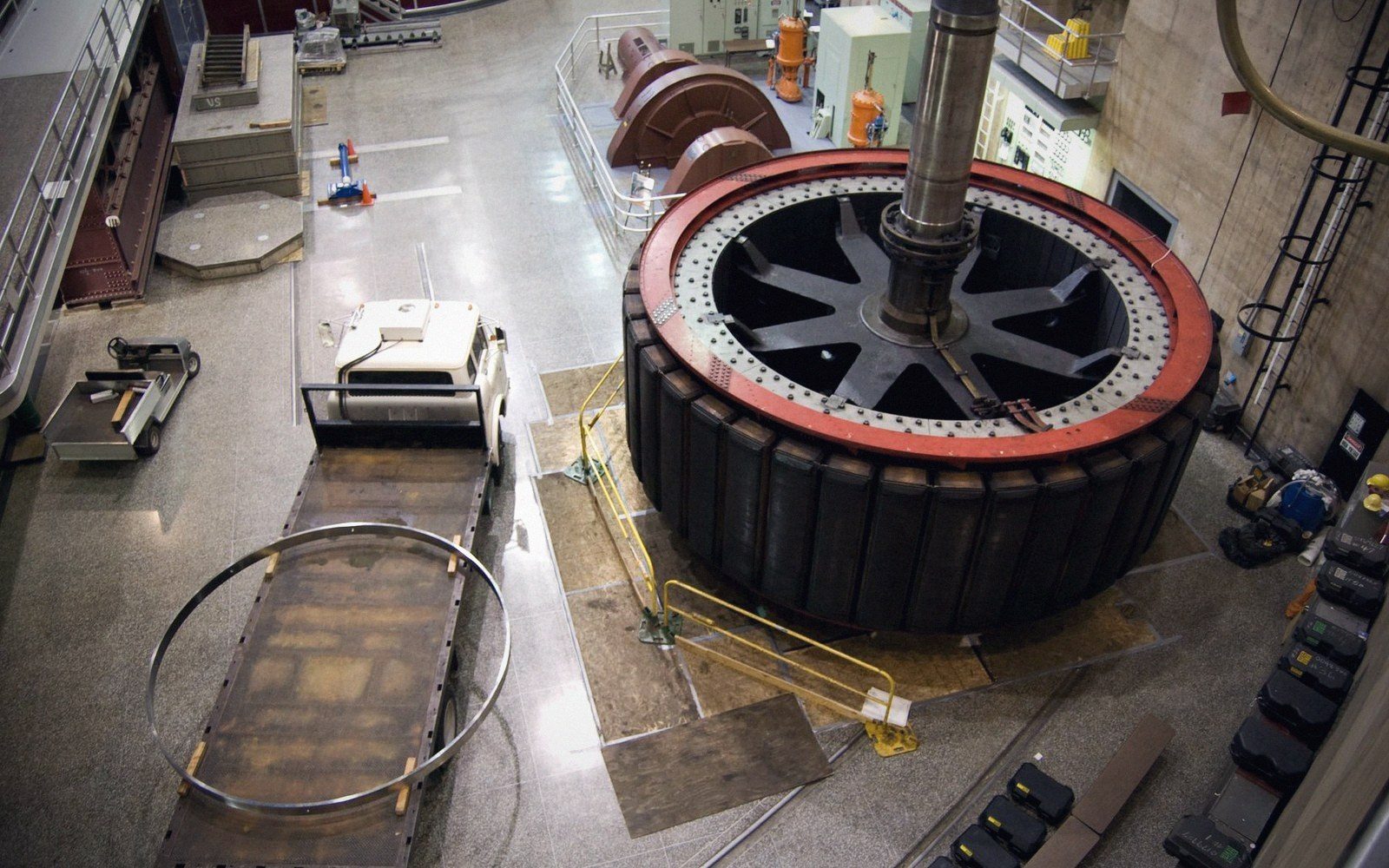
A pumped-hydro station is two reservoirs connected by a shaft. When electricity is abundant — midday, when solar floods the north Italian plain; the small hours, when thermal plant cannot throttle down fast enough — motors drive water uphill into the upper basin. When electricity is scarce — the evening ramp, a windless winter night, a sudden loss of generation — valves open, water falls, and the same machines, now running as turbines, push current back into the grid. The physics is elementary. The infrastructure is not: shafts bored through Alpine granite, penstocks carrying water at enormous pressure, reversible Francis turbines that can switch from motoring to generating in a matter of minutes.
Italy has been doing this longer than most countries. The first reversible pumped-storage installations appeared in the Alps in the mid-twentieth century, attached to a hydroelectric system that itself dates to before the First World War. Today the installed pumping capacity sits above 7 gigawatts, making pumped hydro not merely Italy's largest storage technology but — measured by energy that can actually be dispatched over several hours — the largest storage technology in Europe. Lithium-ion battery systems in Italy are growing quickly, but they operate across tens of minutes; a major pumped-storage station can discharge for six, eight, ten hours. The two technologies are not rivals. They operate on different timescales and solve different problems.
What Actually Gets Stored, and How Much Is Lost
The governing metric is round-trip efficiency: the fraction of the electrical energy that went into pumping that comes back out as generation. Modern reversible units at Italian stations achieve somewhere in the range of 75 to 80 percent. That sounds like a significant tax — and it is, in the sense that the station always returns less than it consumes. But the economics hinge on arbitrage, not efficiency alone. If the energy pumped in costs €30 per megawatt-hour (because it is midday in July and solar is saturating the market) and the energy released earns €120 per megawatt-hour (because it is 19:00 in January and every gas turbine in the Po Valley is running hard), the station is profitable even at 75 percent round-trip — and it has simultaneously stabilised the grid at both ends of the transaction.
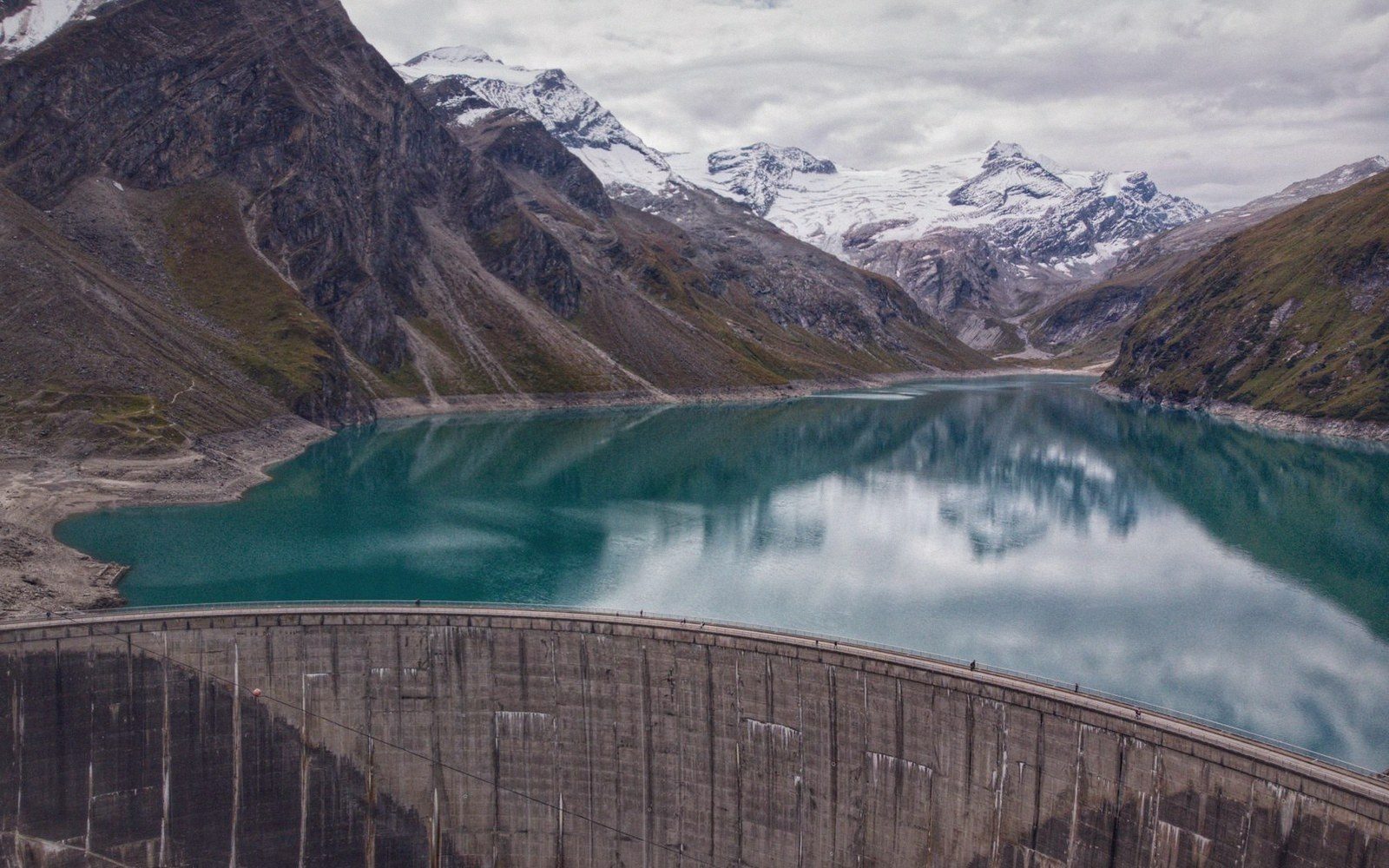
The total reservoir capacity varies by station. The largest Italian pumped-storage facilities hold enough water to sustain full-power generation for somewhere between four and ten hours; a few smaller installations have shallower upper basins and can only sustain peak discharge for two or three. What this means for the national grid is that Italy can, in principle, bank several tens of gigawatt-hours of storage potential in its Alpine and Apennine reservoirs. This is not a precise published number — the effective capacity depends on reservoir fill levels, seasonal constraints, and coordination with existing hydroelectric use of the same catchment — but the order of magnitude is correct, and it dwarfs every battery installation in the country.
Key numbers
The key stations are household names in the Italian power sector. Enel's installations at Roncovalgrande and the complexes around Lago Delio in Lombardy, the Entracque-Chiotas system in Piedmont (one of the largest pumped-storage complexes in Europe, with roughly 1,300 megawatts of reversible capacity concentrated in a single high-altitude installation), the San Fiorano complex in the Lombard Alps — these are the plants that Terna, the national transmission operator, calls on when it needs bulk balancing. They are not quaint heritage infrastructure. They are active, dispatchable, and dispatched daily.
Why the Role Is Growing, Not Shrinking
A grid that runs on sun and wind needs buffers at the timescale of hours. Solar generation in Italy produces a characteristic daily curve: negligible before dawn, rising sharply through the morning, peaking around noon, falling through the afternoon, and hitting zero before demand does. The evening is when the hard work begins — the period between solar's disappearance and midnight when the grid must cover several gigawatts of demand without the resource that dominated the midday hours. Pumped storage was designed, in spirit, for exactly this gap: charge when generation is high, discharge when it is not.
What has changed is the magnitude of the swing. As Italian solar capacity has expanded — passing 30 gigawatts of installed photovoltaic capacity and still growing — the midday surplus has grown with it. On clear summer days, wholesale prices in the IPEX (the Italian power exchange) now regularly fall to very low values, sometimes to near zero, in the midday hours. This is precisely the signal that pumped storage is built to receive. Low prices mean surplus generation; surplus generation is the electricity you pump with. The system's economic logic becomes more compelling as renewables grow, not less.
Wind adds a different texture. Italian wind — concentrated on the Apennine ridges and in the south, particularly in Puglia, Basilicata and Sicily — generates more strongly overnight and in the shoulder seasons. A pumped station charging on overnight wind, then discharging during the following afternoon, is performing a similar service on a different clock. The station does not care which fuel was cheap when it pumped; it cares only that the price spread was wide enough to justify the 20-to-25-percent round-trip loss.
Lithium-ion battery systems in Italy are growing quickly, but they operate across tens of minutes; a major pumped-storage station can discharge for six, eight, ten hours.
The coal closure programme accelerated the importance of this calculation. When Italy's last commercial coal stations exit the system — a process well advanced by the mid-2020s — the thermal generation that previously provided a relatively stable overnight floor disappears. Gas-fired combined-cycle plant covers much of what coal leaves behind, but gas too has a cost structure that makes it prefer to run when prices are high. Pumped storage, uniquely, can absorb the surplus from renewables at one moment and release it at another without combusting anything. Its operational carbon intensity is effectively zero (pump losses aside, and those losses are covered by whatever mix was generating at the time).
What It Cannot Do, and What Comes Next
Honesty about limits matters. Pumped storage is not a general solution to all storage needs. Its geography is fixed: you need two reservoirs at different altitudes, connected by enough vertical drop to generate useful power, in terrain where construction is feasible and where the water rights can be managed. Italy's existing sites are concentrated in the Alps and, to a lesser extent, the Apennines. There is limited undeveloped high-quality terrain left; the country's pumped-hydro capacity cannot simply be doubled by policy decision. Environmental constraints on reservoir expansion, competition with drinking water and irrigation uses, and the sheer capital cost of new civil works (borings, penstocks, powerhouse excavation) all apply. The expansion that is happening is mostly the repowering and uprating of existing stations — adding capacity to infrastructure that already exists — rather than greenfield construction.
There is also the question of response speed. Pumped storage can go from rest to full generation in four to twelve minutes, depending on the station and the configuration. That is fast enough for most balancing tasks, but not fast enough for the sub-second and second-scale frequency response that lithium batteries can provide. This is the correct framing for battery storage: not as a competitor to pumped hydro but as a complement, covering the instantaneous response band while pumped storage covers the hours. Terna coordinates both, drawing on each at the timescale where it is genuinely useful.
The trajectory, then, is one of sustained relevance. Italy's pumped-storage fleet is old infrastructure in an increasingly favourable role. As Alpine hydro demonstrates more broadly, age is not the same as obsolescence — a reservoir dug in the 1950s holds exactly as much water today. What changes is the grid around it: more variable, more price-volatile, more dependent on the kind of dispatchable, emission-free, multi-hour generation that only pumped storage can provide at scale. The machines turn, the water falls, the grid stays balanced. The battery was always there. It was made of granite and water.