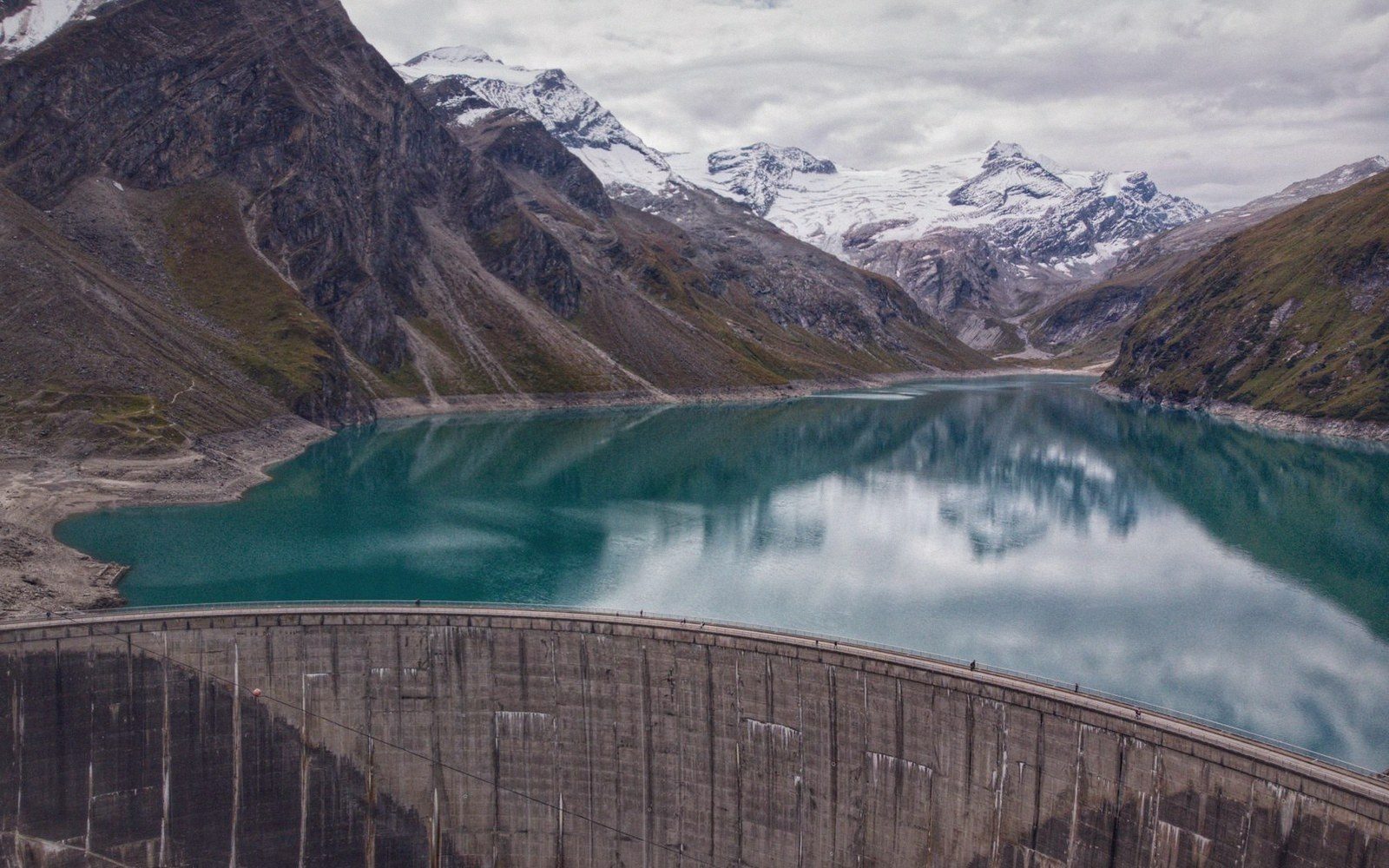
Long before a single solar panel appeared on a Sicilian rooftop, before a wind turbine turned on an Apennine ridge, and before the term "energy storage" entered the policy vocabulary, Italy was already running a large-scale hydroelectric system in the Alps. The reservoirs behind dams at two thousand metres above sea level, the steel penstocks dropping hundreds of metres of head to turbine halls buried in the rock below — these are not remnants of an industrial age that has passed. They are still generating, still balancing, still indispensable. Understanding why they were built where they were, and what they can actually do, is the beginning of understanding how Italy's grid works at all.
The geography that made it inevitable
The Alps gave early Italian engineers something that coal-rich Britain and flat Holland did not have: elevation. Water falling from a high reservoir through a long penstock — the steel pipe or tunnel that carries pressurised water down to the turbine — generates power proportional to both the flow rate and the vertical drop, the salto in Italian engineering tradition. The greater the head, the more power from the same volume of water. Alpine valleys offered head measurements in the hundreds of metres, sometimes exceeding a thousand. A modest flow through a very long drop could rival what a much larger river on flat terrain could never achieve.
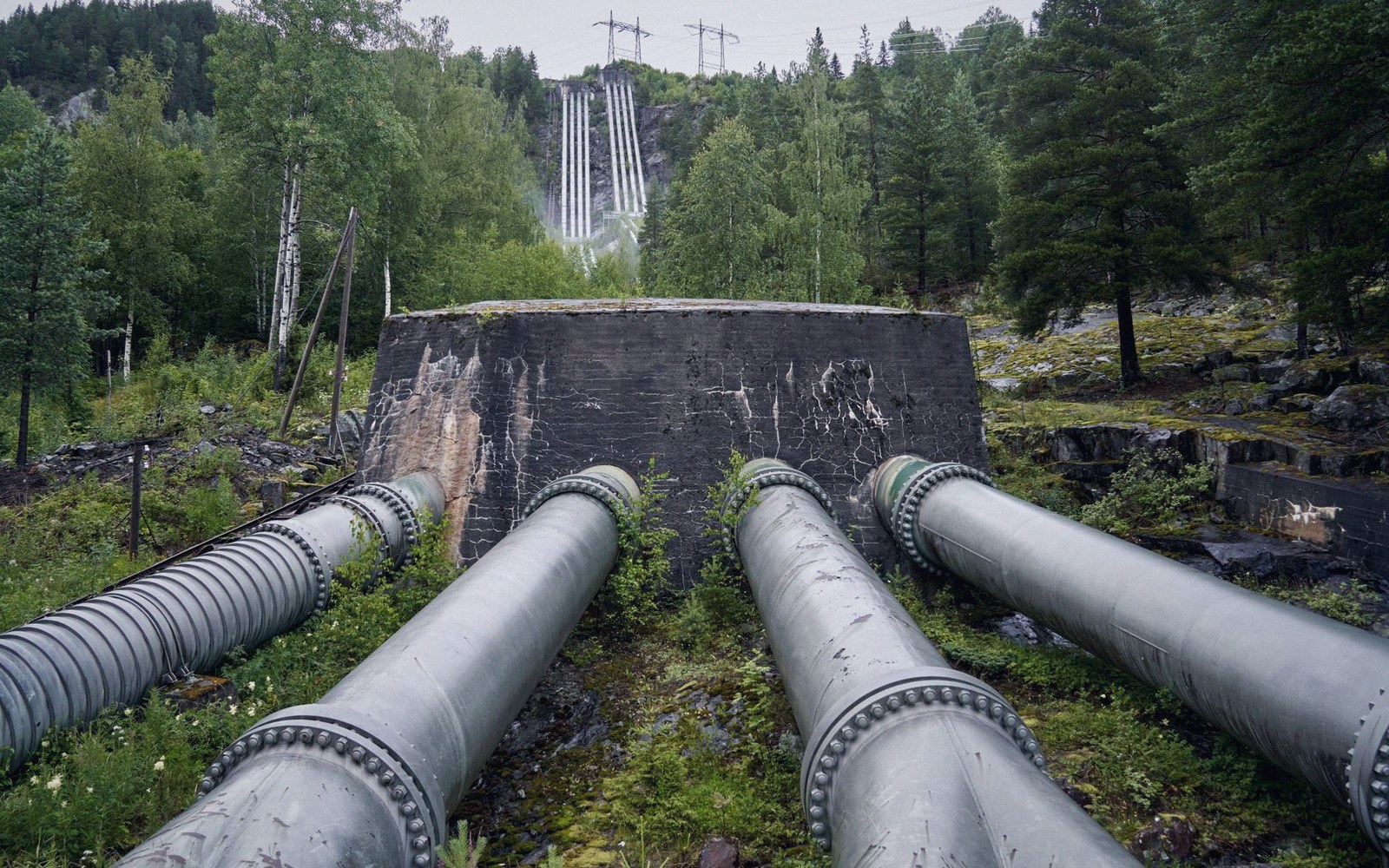
The first serious Alpine hydro stations came online in the final years of the nineteenth century and the first decade of the twentieth. Northern Italian industry — textiles in Lombardy, chemicals in Piedmont, early electrical tramways — was hungry for power and unwilling to depend on imported coal. The geography was not merely convenient; it was transformative. Private companies, often with French or Swiss capital, raced to claim concessions on Alpine streams. By the 1920s, electrification of the Italian rail network was already underway, and it ran on Alpine current. What Britain moved by steam, northern Italy moved by water falling through mountains.
The interwar decades saw a dramatic acceleration. The Fascist government, eager for autarky and sensitive to coal import dependency, pushed construction hard. Major dams were built or enlarged across the arc from Piedmont through Lombardy to the Veneto and into the Trentino-Alto Adige. The Valtellina valley in Lombardy became one of the most intensively developed hydro corridors in Europe, with reservoirs and stations stacked in sequence so that the same water could be used more than once as it descended. This cascading logic — generate at the top reservoir, release water to an intermediate basin, generate again below — is still how much of the system operates.
What the reservoirs actually do
A reservoir is not simply a source of water. It is a store of potential energy, and that distinction matters enormously for grid operation. A natural lake or a run-of-river plant must generate when the water arrives; it has limited ability to choose its moment. A reservoir-fed station can wait. The water accumulated over weeks of snowmelt or autumn rain can be held until the grid needs it — on a cold January evening when gas turbines are running hard, on a summer afternoon when a cloud bank has knocked southern solar output flat, or in the minutes after a large plant trips unexpectedly and the operator needs megawatts immediately.
Italian reservoir hydro can respond very fast. Large Francis turbines — the dominant type in Alpine stations, suited to high to medium head — can go from standstill to full output in minutes. Some plants are configured for even faster response, operating in spinning-reserve mode with the turbine already turning in air, able to take on load in seconds. This is not the behaviour of a slow, ponderous technology. It is flexible generation that a system operator can call on precisely when the awkward moments arrive: the evening ramp when solar drops away and demand is still high, or the dead hours before dawn when everything depends on dispatchable plant.
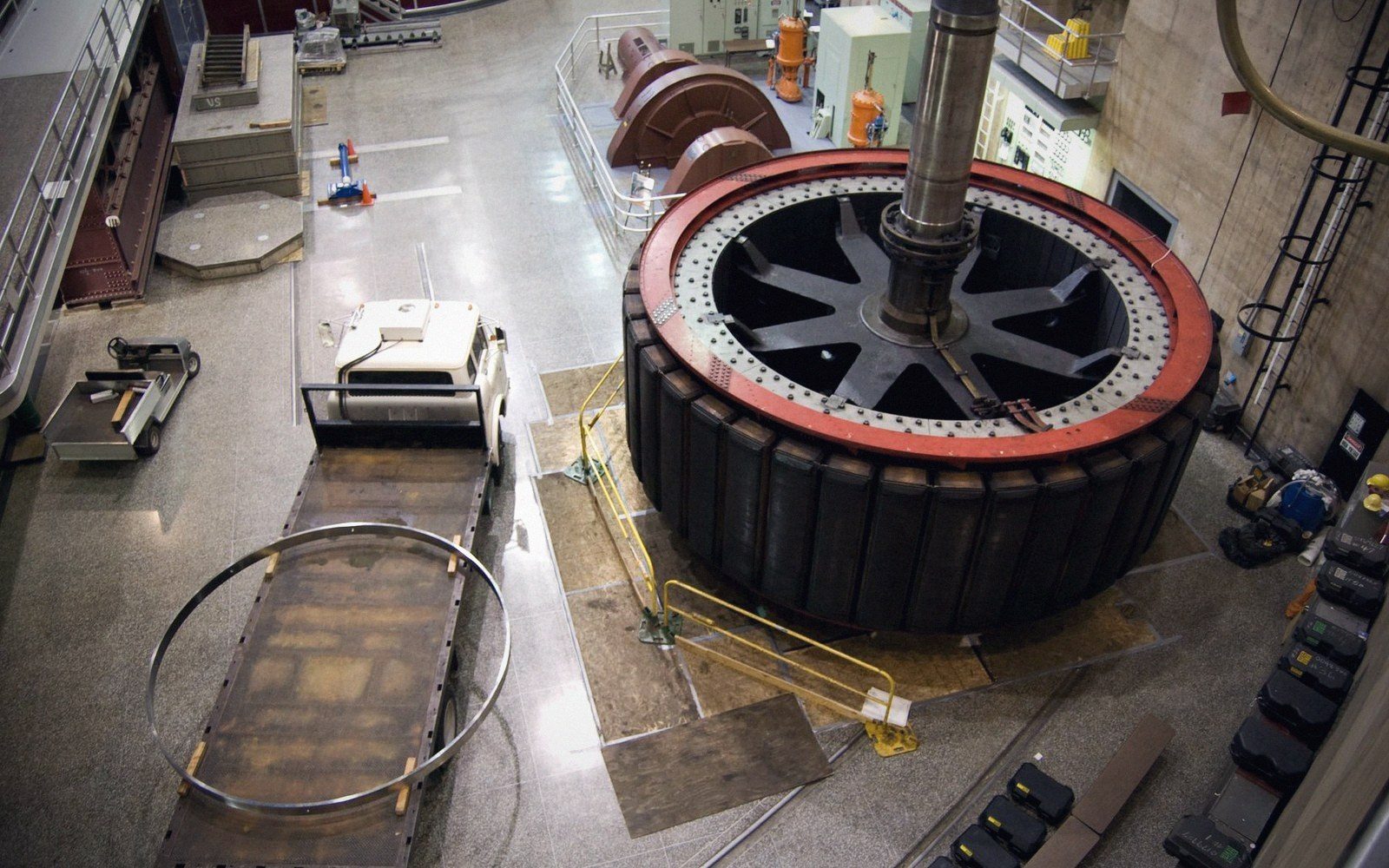
The installed capacity of Italian large hydro has sat at roughly 18 to 19 gigawatts for several decades. Pumped-storage schemes — where electricity is used to push water back uphill into the reservoir — account for a substantial share of that figure. Pumped storage is the grid's only genuine electrical battery at scale: it stores surplus generation from any source and returns it as despatchable output later, with round-trip losses in the 20 to 25 percent range, which is acceptable given the service it provides. Several of the major Alpine schemes are configured for both conventional generation and pumping, meaning the same plant can export power in the morning and absorb it overnight, arbitraging across the day.
Annual hydro output varies significantly with rainfall and snowpack. A dry year — low winter snowfall, an early spring melt that rushes through before demand peaks, a summer drought reducing reservoir refill — can cut generation by a quarter or more relative to a wet year. What a dry year removes from the system is not just energy but flexibility: when reservoirs are low, operators must conserve water, and the ability to respond quickly to grid calls is constrained. This variability is the permanent tension in relying heavily on Alpine hydro.
The Alps gave early Italian engineers something that coal-rich Britain and flat Holland did not have: elevation.
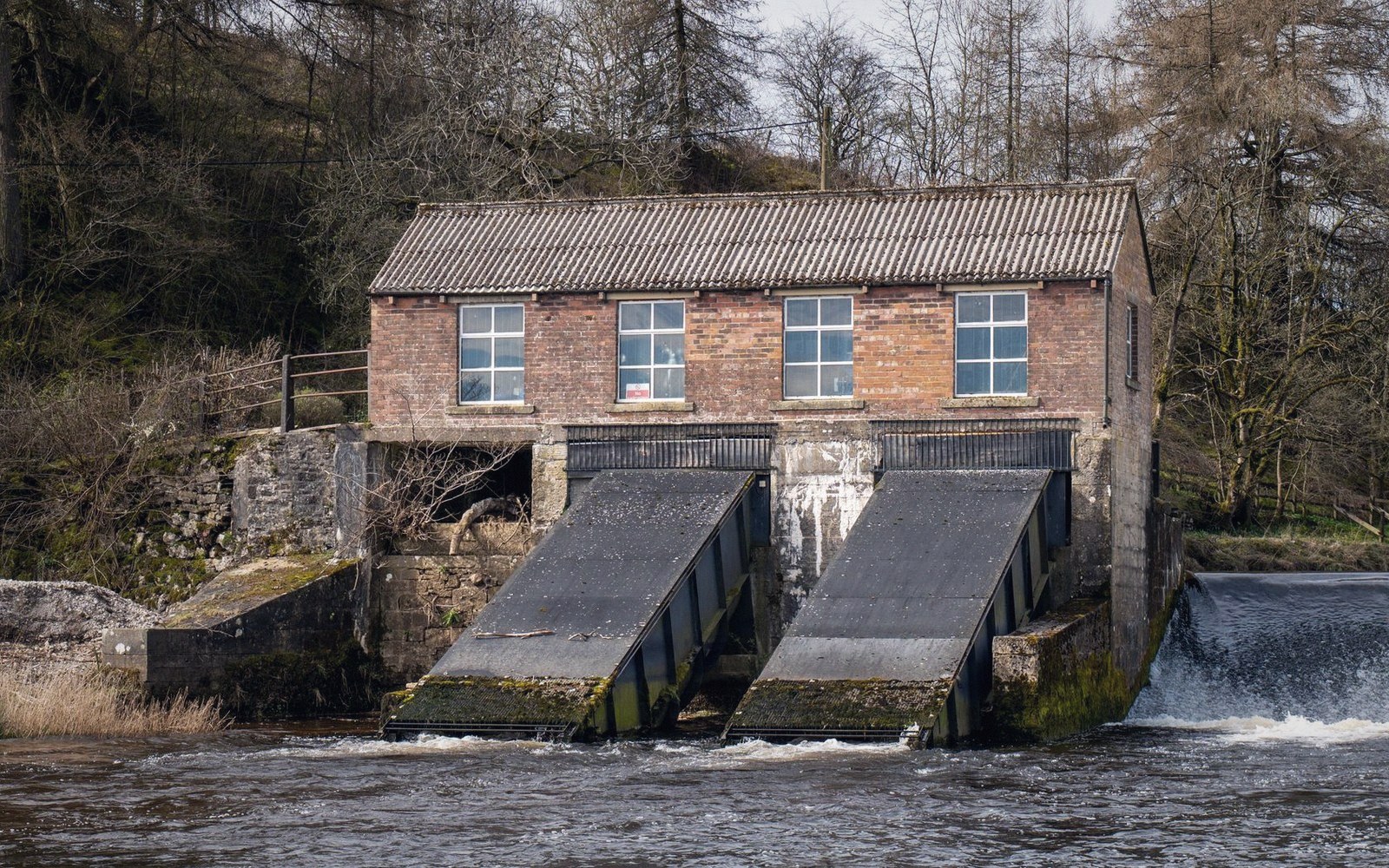
The infrastructure layer nobody sees
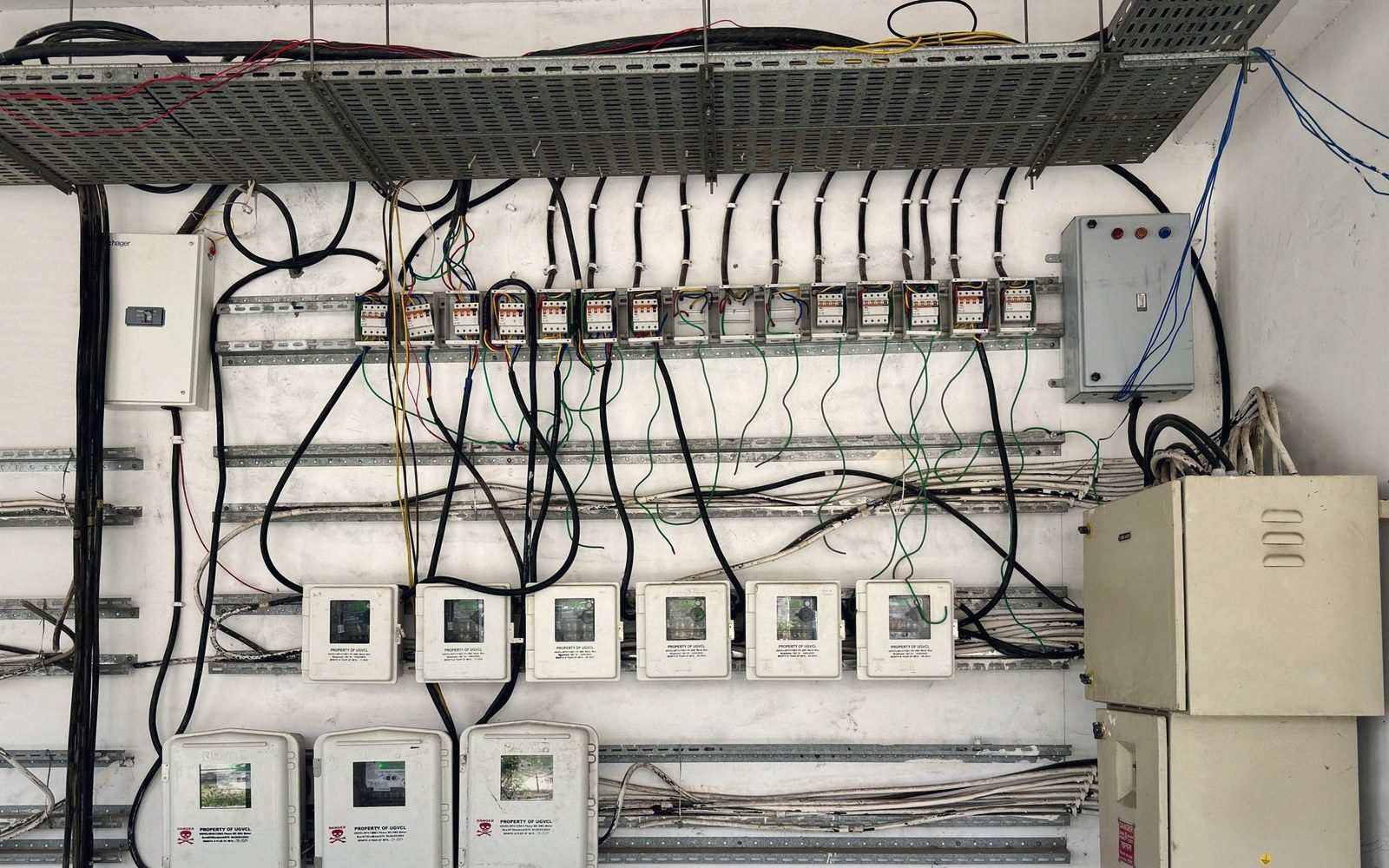
Most of what makes Alpine hydro work is underground or underwater and therefore invisible to anyone not specifically looking for it. The penstocks run inside the mountain, not down its face. The turbine halls — centrale in Italian — are often entirely subterranean, carved out of rock and reached by tunnel. The intake structures at the reservoir are submerged. Visitors to an Alpine valley may stand a hundred metres above a turbine hall running several hundred megawatts and have no idea it exists.
This invisibility has a practical consequence: the infrastructure is extremely durable and surprisingly difficult to expand. Adding capacity means new tunnels, new turbines, new penstocks — civil engineering on a large scale, in mountain terrain, subject to geological surveys, environmental assessments and often to conflicts with tourism and local conservation interests. Most of the easily exploited Alpine sites were taken by mid-century. The growth curve for large hydro in Italy essentially plateaued by the 1970s, with modest additions since. What exists is what will exist, more or less, for the foreseeable future.
Chronology
- Late 1890s–1910sfirst serious Alpine hydro stations commissioned; northern industrial demand the main driver
- 1920selectrification of Italian rail network, substantially powered by Alpine hydro
- 1920s–1940slarge interwar construction push under autarky policy; major reservoirs across Piedmont, Lombardy, Veneto, Trentino-Alto Adige
- Mid-20th centurycapacity plateaus as most exploitable Alpine sites are developed
- 1970s onwardgrowth in large hydro essentially flat; focus shifts to repowering existing stations
- Presentturbine repowering programmes continue; pumped storage increasingly valued alongside variable renewables
What is changing is efficiency. Older turbines installed in the 1950s and 1960s are being repowered — new runners, new generators, upgraded control systems — that can extract meaningfully more energy from the same water and respond more precisely to grid dispatch signals. This is quiet work that rarely makes headlines, but across a fleet of several hundred stations it accumulates into significant additional flexibility at modest cost compared to new construction.
Why age is not the same as obsolescence
The narrative of energy transition often implies that old infrastructure must be replaced by new. Alpine hydro does not fit that story neatly. The dams built under Mussolini, the turbine halls blasted from Lombardy rock in the 1950s, the penstocks installed when the main competition was coal — all of these are still operating, still producing carbon-free electricity, still providing the grid services that modern variable renewables cannot supply for themselves.
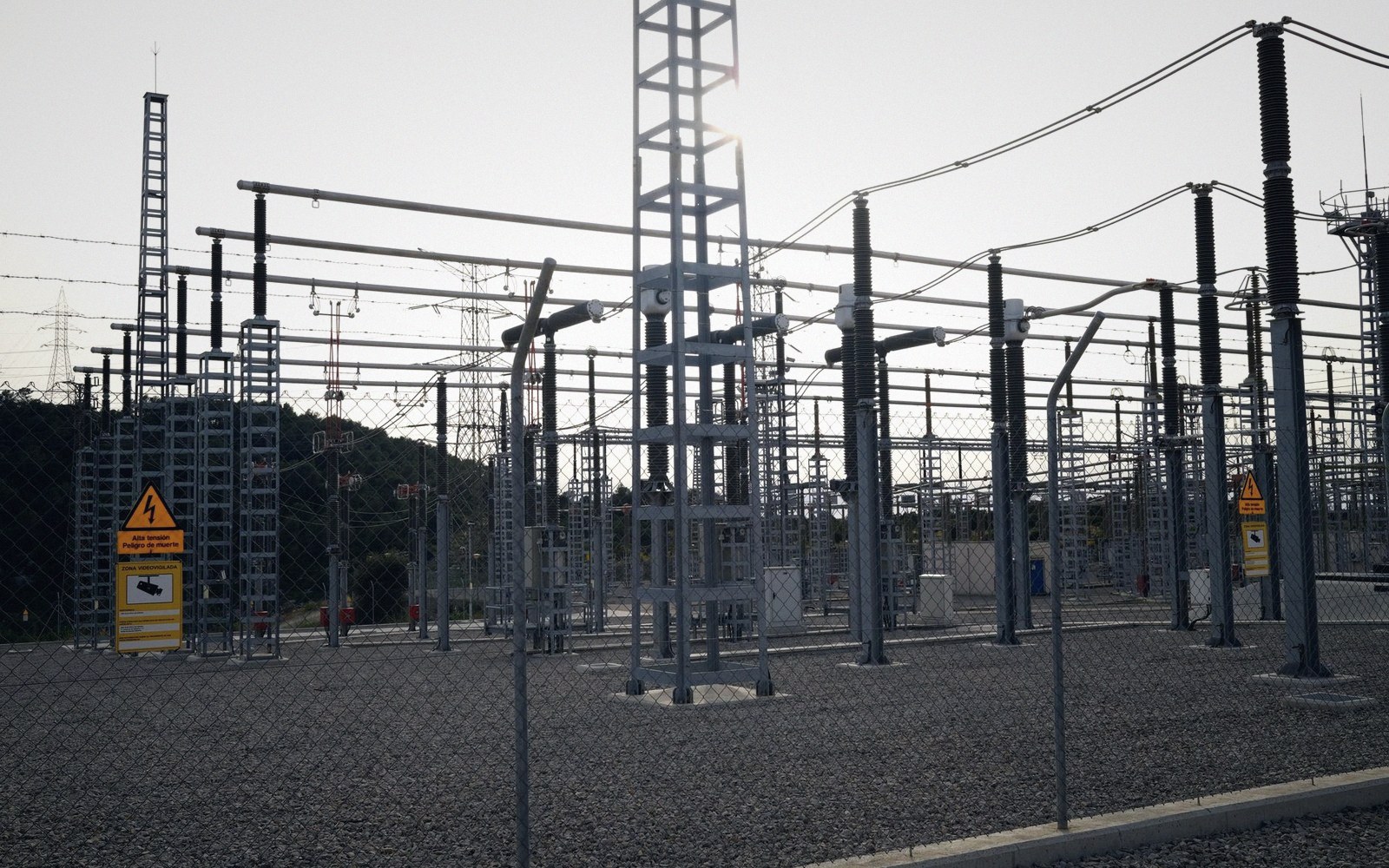
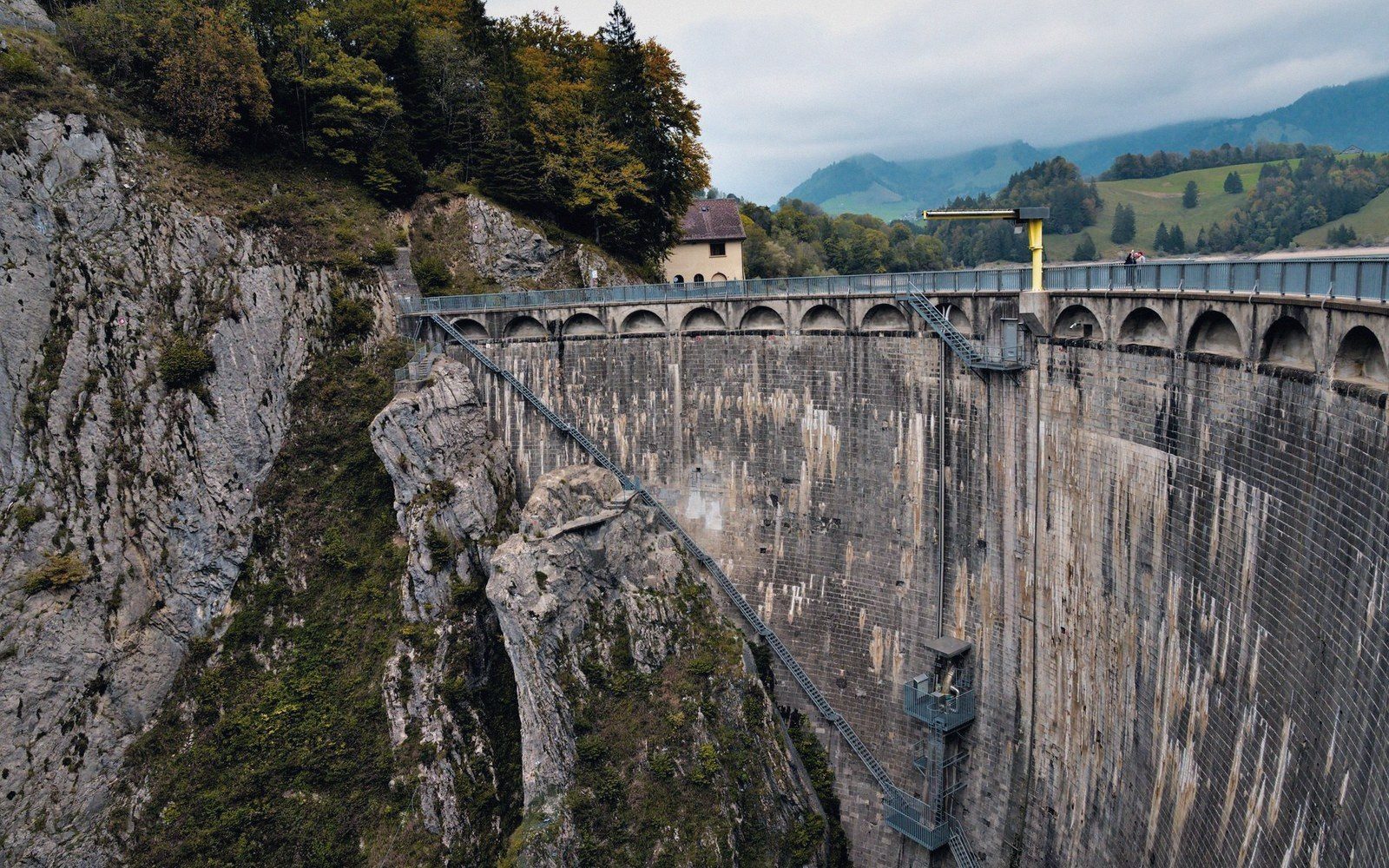
If Italy succeeds in building out the solar capacity its targets require — tens of gigawatts more across the south and centre — the value of Alpine storage will increase, not decrease. More solar means more midday surplus and more evening deficit; more surplus means more water can be pumped uphill for release later; more flexibility at the top of the system makes the swings at the bottom manageable. The mountains that made early electrification possible turn out to be exactly what a grid heavy with intermittent generation needs at its core.
A century of Alpine storage was not planned as infrastructure for the age of solar and wind. It was built for quite different reasons, by companies and states pursuing quite different goals. That it fits so well into the present challenge is not foresight — it is geology.