Where the Wind Is
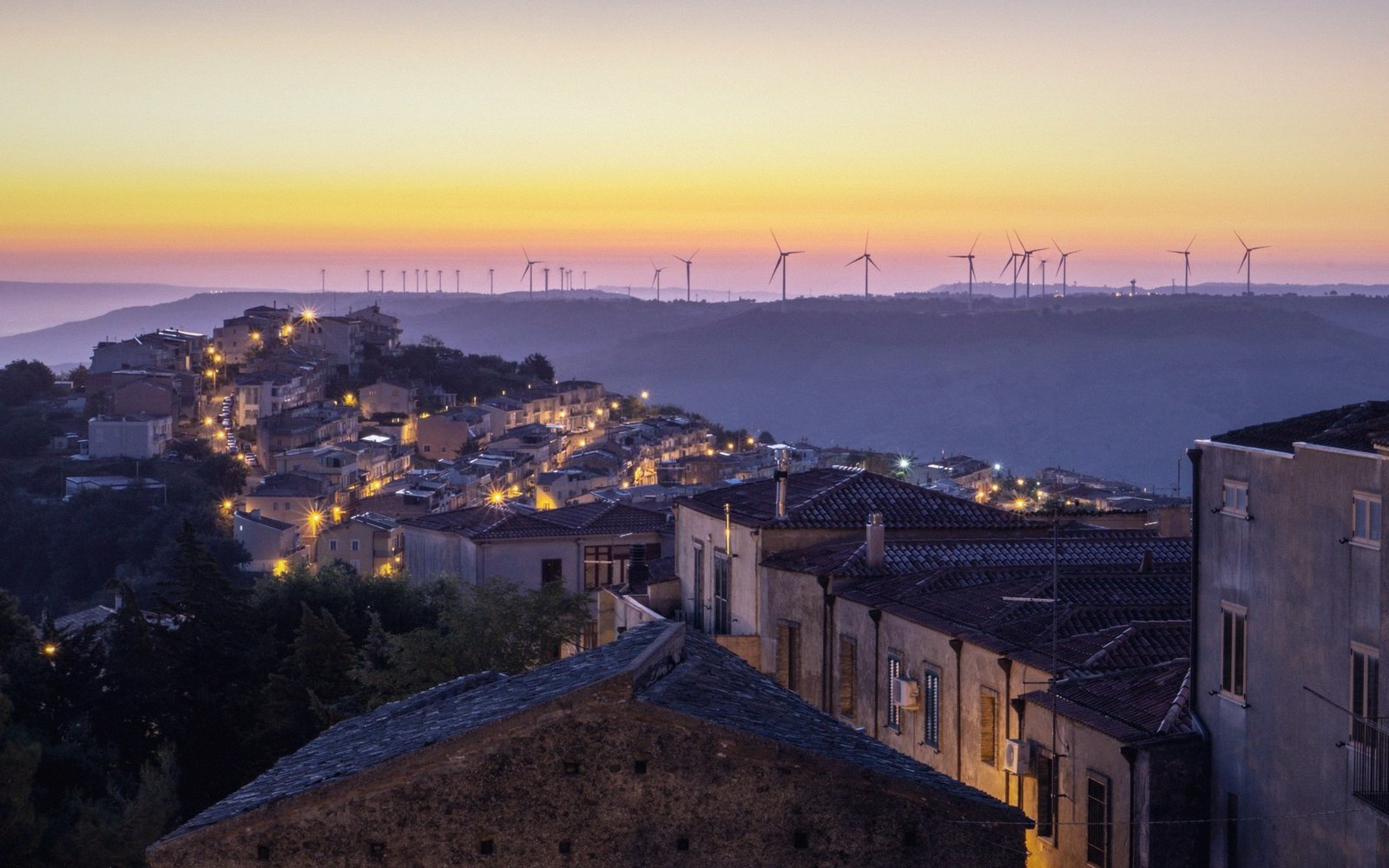
Italy's wind map is not uniformly favourable. The country's length and its two mountain chains — the Alps to the north, the Apennines running down the spine — create a landscape where useful wind is geographically concentrated rather than spread evenly. The Alps largely block cold northerly flows before they reach the Po Valley; the result is that northern Italy, the country's industrial demand centre, has modest wind resources by European standards. The south is different. Calabria, Basilicata, Sicily, Sardinia, and the Apennine ridges of Campania and Puglia sit in the path of both the Tramontane and the Sirocco — seasonal flows that load the ridges with consistent, exploitable kinetic energy across much of the year.
The practical consequence is visible in the installed base. Puglia alone accounts for a substantial share of Italy's total wind capacity, alongside Campania and Sicily. The sites that actually get built are the ones where the terrain forces airflow to accelerate as it crosses a ridge line — a textbook example of the Venturi effect at landscape scale. A hilltop that might see average wind speeds of 6 metres per second in the valley below can register 8 or 9 metres per second at the crest, and because power extracted from the wind scales with the cube of velocity, that difference in speed is the difference between a site that pencils out financially and one that doesn't.
Terrain, Access and the Grid Problem
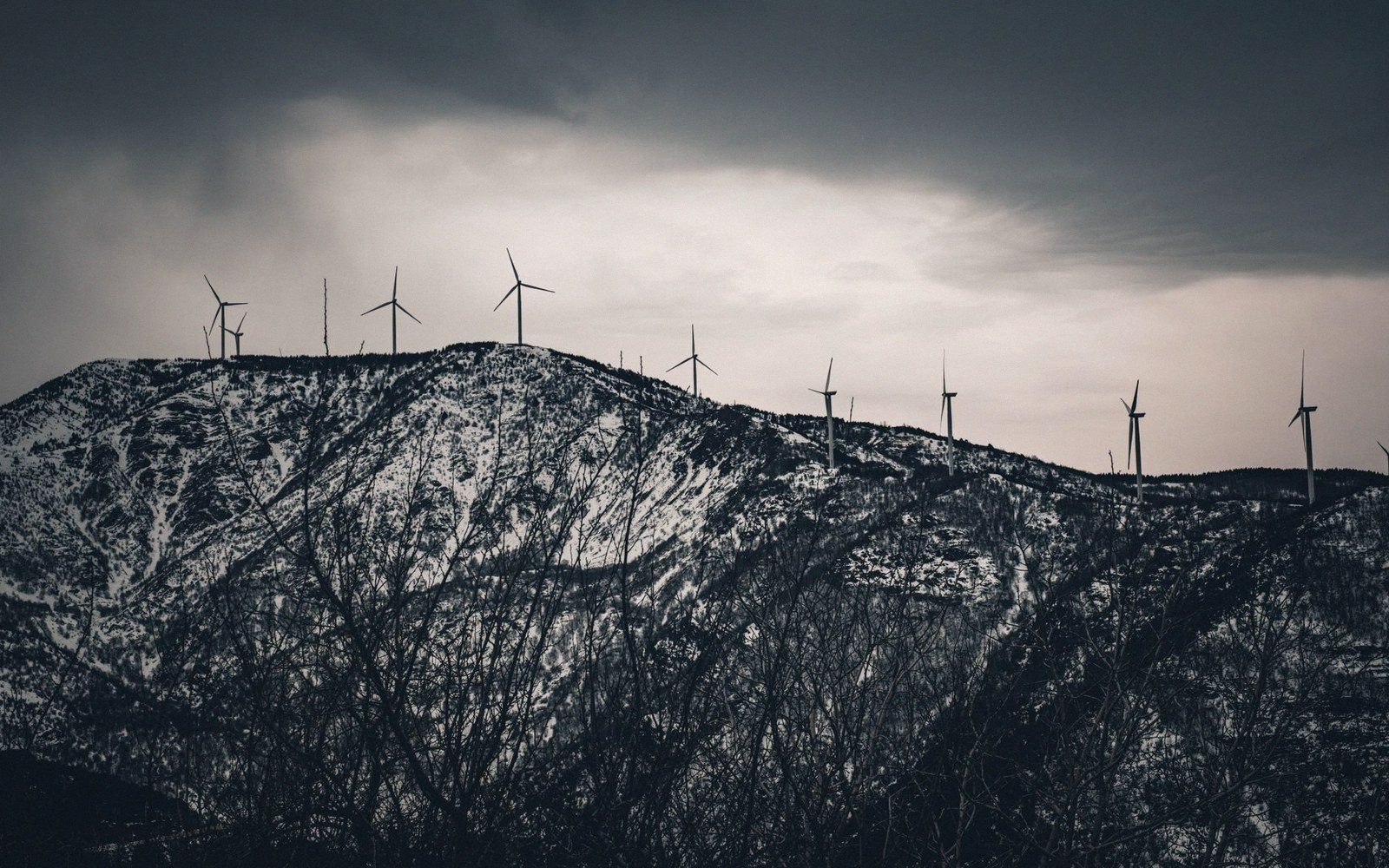
Identifying a ridge with good wind is the easy part. Getting a turbine onto it — and then off it, electrically — is where the difficulties accumulate. Southern Italian ridges are often steep, narrow and served by rural roads built for farm traffic rather than the multi-axle low-loaders that transport nacelles and blade sections. Civil works for a modern large turbine frequently cost as much as, or more than, the turbine foundation itself when the site is genuinely remote. Blade lengths on contemporary machines now exceed 70 metres; the turning radius required to navigate a mountain hairpin can simply be impossible, which forces developers toward either smaller turbines or significant road upgrades.
Grid connection compounds the problem. Moving power from generation zones in the south to demand centres in the north requires traversing a transmission network that was not designed with large renewable injections in mind. A ridge site in Basilicata may be 40 or 50 kilometres from the nearest high-voltage substation, and that connection cable — its cost, its permitting, its grid reinforcement requirement — lands on the project's balance sheet. Terna, the national transmission operator, manages a queue of connection requests and imposes grid code requirements that can delay a project for years even after planning consent is granted.
Key numbers
Planning itself has been the single largest source of delay in Italian wind development. Unlike solar, which can in principle be sited on flat agricultural or industrial land close to load, wind projects on ridges often intersect with protected landscape designations, archaeological buffer zones, and — in a country with profound regional variation in governance — the permitting preferences of individual municipalities and regional authorities. The result has been a development timeline that Italian industry groups have repeatedly described as among the longest in Europe, measured from site identification to first generation.
What Capacity Factor Actually Means Here
Capacity factor is the ratio of actual energy generated over a period to the theoretical maximum if the plant ran at full rated output continuously. A 100 MW wind farm with a 30 percent capacity factor generates roughly the same annual energy as a 30 MW plant running flat out all year. On the best Italian ridge sites — Apennine crests in Campania, the Gargano promontory in Puglia, the western flank of Sardinia — capacity factors for modern turbines typically range between 28 and 38 percent. That is competitive with European averages for onshore wind and meaningfully better than the 20 to 25 percent seen at less exposed inland sites.
The ridge premium is real, but it is not free. Higher wind exposure usually means higher turbulence intensity, which accelerates fatigue loading on blades and bearings. Maintenance access to a ridge site in winter, when storms are most frequent and roads most treacherous, is harder than descending to a flat-country turbine. Operators building maintenance schedules for southern Italian ridge wind factor in the probability of access windows, not just fault rates, and the two interact in ways that flat-land assumptions miss.
What the capacity factor figure cannot tell you is when that output arrives. A ridge site generating 33 percent on an annual basis is not generating steadily around the clock — it is delivering concentrated bursts during the passage of weather systems and producing very little during the calm periods between them. The distinction between intermittent and unreliable matters here: wind on these ridges is forecastable 24 to 48 hours out with reasonable accuracy, which lets Terna plan around it, but the variability is real and the grid must accommodate it. In the hours when the ridge wind is strong, curtailment — physically disconnecting turbines to avoid overloading transmission lines — is already a recurring feature of the southern Italian system. Solving the grid constraint, not building more turbines, is now the binding limit on how much of that ridge wind actually reaches a socket.