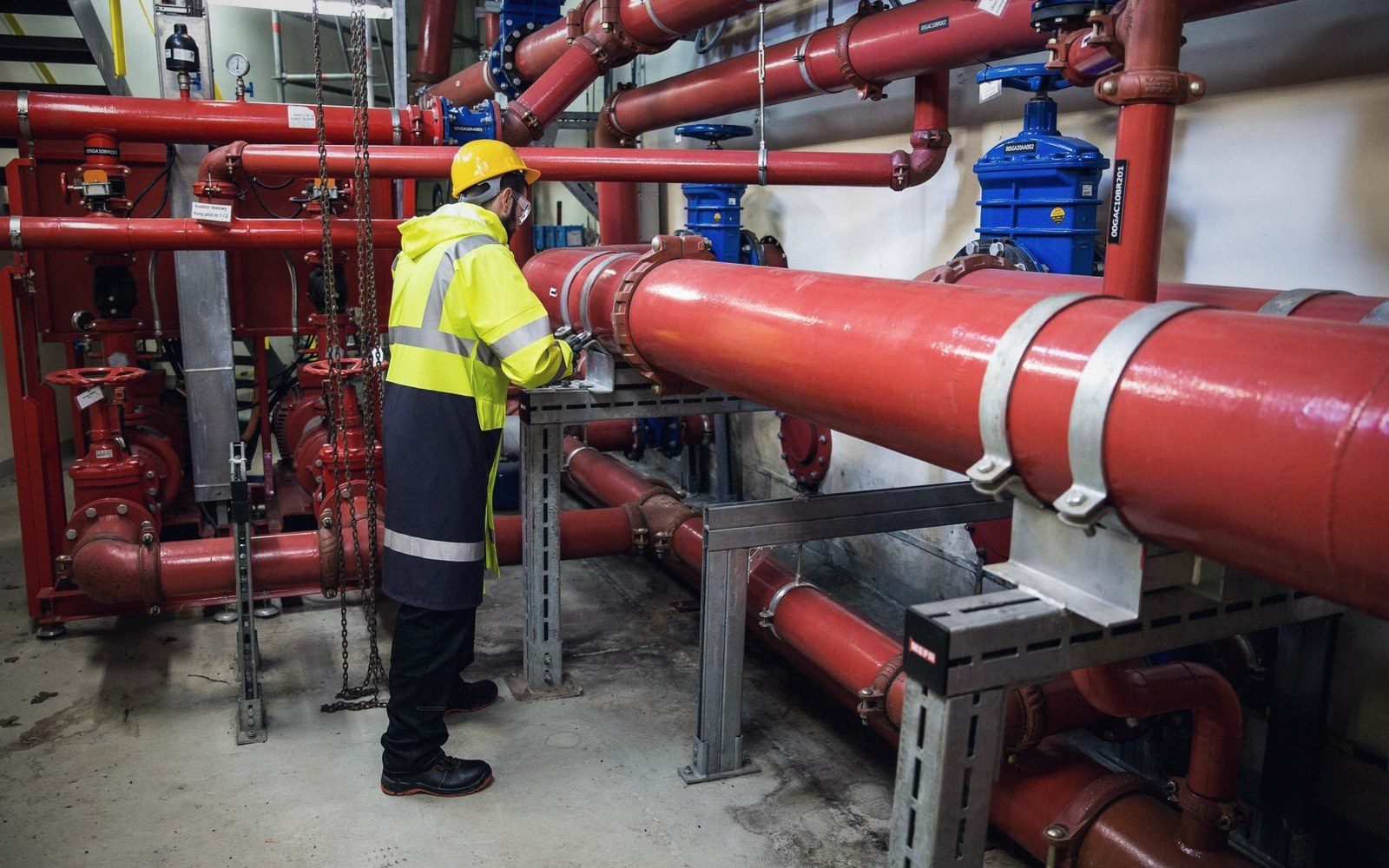
The Value of a Source That Does Not Stop
Every other renewable on the Italian grid is, in some sense, waiting. Solar panels wait for daylight. Wind turbines wait for pressure gradients to move air across the ridges of Calabria and Campania. Even the big Alpine reservoirs are ultimately waiting on rainfall and snowmelt, however cleverly the water is saved. Geothermal power, drawn from the heat of the earth itself, waits for nothing. The steam rising through the wells at Larderello and the other plants of the Tuscan field does not notice what time it is, or what month, or whether a high-pressure system has stalled over the Mediterranean. It rises because the rock beneath is hot, and the rock is hot continuously.
This is not a small distinction. The hardest moments for any grid are not the ones of peak demand — those are predictable, and dispatchable plant can be readied for them. The hard moments are the ones where several pressures coincide: demand has not yet fallen, solar output has ended, wind is low, and the gas plants that normally fill the gap are being asked to work harder than is efficient. Geothermal plant is simply running through all of it. At four in the morning, when the grid is at its quietest and most of the flexible reserve sits idle, the geothermal stations are still producing at roughly the same output they managed at noon.
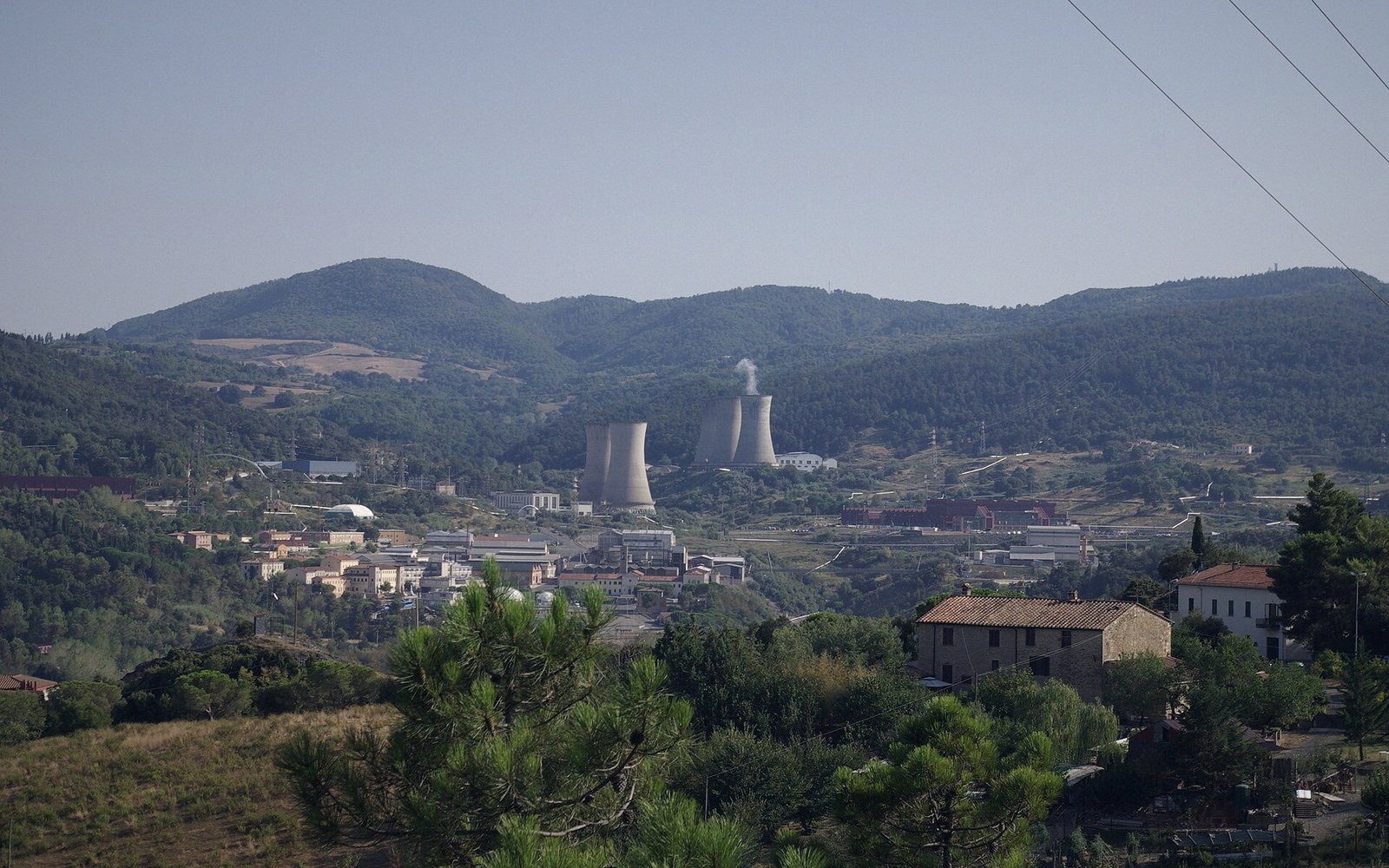
Italy's geothermal capacity is concentrated almost entirely in Tuscany — in the municipalities around Larderello, Pomarance, and Piancastagnaio on Monte Amiata — and it is operated by Enel Green Power. The installed capacity is in the region of 900 megawatts, and the annual output typically runs to around 6 terawatt-hours, a figure that has been broadly stable for some years. Six terawatt-hours sounds modest against Italy's total electricity consumption of roughly 300 TWh per year, but measuring it against total renewable output tells a different story: it arrives without intermittency, at all hours, fully dispatchable. The capacity factor — the ratio of actual output to the theoretical maximum if the plant ran flat out all year — sits at roughly 75 to 80 percent. Compare that with a solar installation in Sicily at roughly 20–25 percent, or an onshore wind farm in southern Italy at perhaps 25–30 percent, and the difference in what each unit of installed capacity actually delivers becomes concrete.
Why More Is Not Simply Possible
Here the word "dispatchable" demands precision. Geothermal stations are dispatchable in the sense that they can be ramped down and up to some degree — Enel Green Power does use them for balancing — but their real value is in baseload: hours and hours of steady, predictable generation that planners can count on when building the rest of the supply picture. The awkward truth is that no planner can simply order more of it.
The Tuscan geothermal field is a geological accident. Hot, permeable rock close enough to the surface to be economically drilled, overlain by a cap of impermeable material that traps steam at useful pressure, with a reservoir large enough to sustain extraction over a century — Larderello was first in the world to generate electricity this way, in 1904, and the field has been developed incrementally ever since. What that history reveals is that the resource is where the geology put it. Italy has prospected beyond the Tuscan field, and there are lower-temperature resources elsewhere, but nothing yet that approaches the steam temperatures and reservoir productivity of the Larderello and Monte Amiata fields of southern Tuscany. Drilling a new well is expensive, the permitting timescale is long, and each well must prove itself by delivering at viable pressure and temperature. Many do not.
Reinjection of condensed steam back into the reservoir is essential to maintaining pressure and longevity — without it, a field can be mined out rather than sustained — but it is also a genuine engineering constraint on how aggressively the resource can be expanded. The reservoir is not a tank you fill with new capacity; it is a living hydrological system underground, and what you take from it must be balanced against what returns.
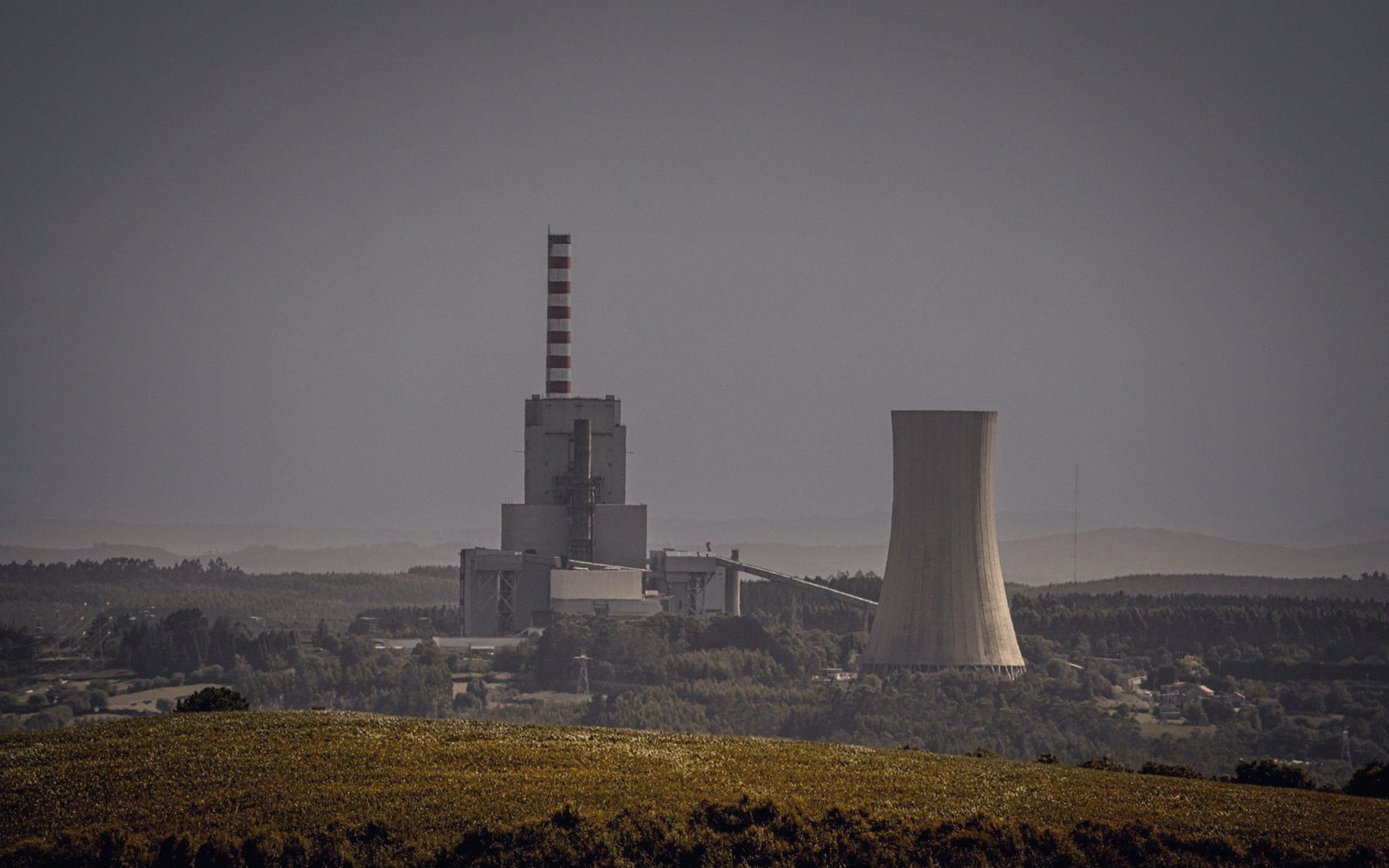
The honest picture, then, is a source of around 6 TWh per year that the Italian grid can count on absolutely, that smooths out the overnight trough when solar has fallen to zero, that requires no battery, no backup gas plant, no weather forecast — but that is also, for practical purposes, fixed in volume. It cannot be doubled by political will or investment alone. For a grid that is adding intermittent solar and wind capacity at pace, geothermal's value is not just its output. It is the certainty of that output, delivered in exactly the hours that every other clean source is quiet.